Tuesday, July 30, 2024

A00066 - Ajahn Chah, Thai Buddhist Monk

 Ajahn Chah

"You are your own teacher.  Looking for teachers, can't solve your own doubts.  Investigate yourself to find the truth -- inside, not outside.  Knowing yourself is most important."


88888888888888888888888888888888888888888888888888888888888888888888888888

Biography
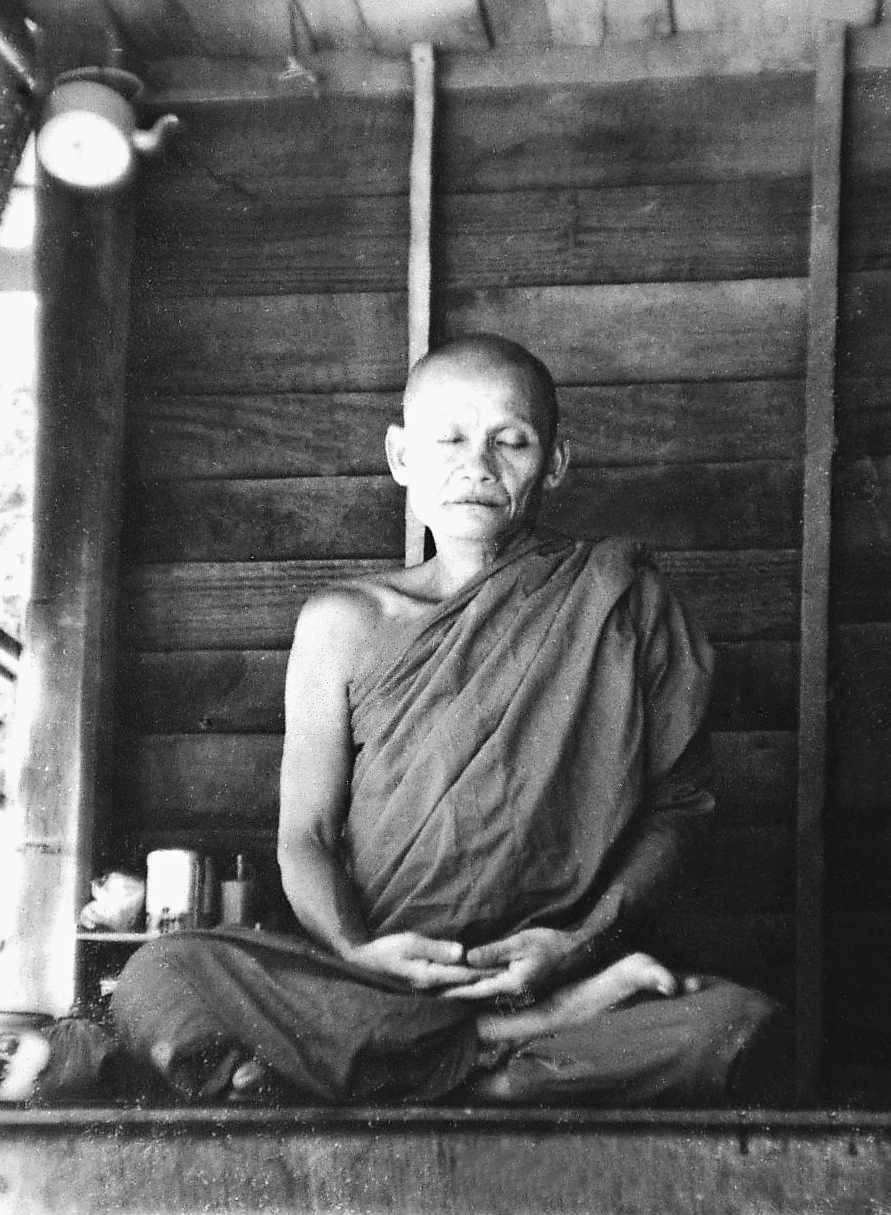
Luang Por Chah early years


Venerable Ajahn Chah was born on June 17, 1918 in a small village near the town of Ubon Ratchathani, North-East Thailand. After finishing his basic schooling, he spent three years as a novice before returning to lay life to help his parents on the farm. At the age of twenty, however, he decided to resume monastic life, and on April 26, 1939 he received upasampadā (bhikkhu ordination). Ajahn Chah’s early monastic life followed a traditional pattern, of studying Buddhist teachings and the Pali scriptural language. In his fifth year his father fell seriously ill and died, a blunt reminder of the frailty and precariousness of human life. It caused him to think deeply about life’s real purpose, for although he had studied extensively and gained some proficiency in Pali, he seemed no nearer to a personal understanding of the end of suffering. Feelings of disenchantment set in, and finally, in 1946 he abandoned his studies and set off on mendicant pilgrimage.

He walked some 400 km to Central Thailand, sleeping in forests and gathering almsfood in the villages on the way. He took up residence in a monastery where the vinaya, (monastic discipline), was carefully studied and practised. While there he was told about Venerable Ajahn Mun Bhuridatta, a most highly respected meditation master. Keen to meet such an accomplished teacher, Ajahn Chah set off on foot for the Northeast in search of him.

At this time Ajahn Chah was wrestling with a crucial problem. He had studied the teachings on morality, meditation and wisdom, which the texts presented in minute and refined detail, but he could not see how they could actually be put into practice. Ajahn Mun told him that although the teachings are indeed extensive, at their heart they are very simple. With mindfulness established, if it is seen that everything arises in the heart-mind, right there is the true path of practice. This succinct and direct teaching was a revelation for Ajahn Chah, and transformed his approach to practice. The Way was clear.

For the next seven years Ajahn Chah practiced in the style of the austere Forest Tradition, wandering through the countryside in quest of quiet and secluded places for developing meditation. He lived in tiger and cobra infested jungles, using reflections on death to penetrate to the true meaning of life. On one occasion he practised in a cremation ground, to challenge and eventually overcome his fear of death. While he was in the cremation ground, a rainstorm left him cold and drenched, and he faced the utter desolation and loneliness of a wandering homeless monk.

In 1954, after years of wandering, he was invited back to his home village. He settled close by, in a fever ridden, haunted forest called ‘Pah Pong’. Despite the hardships of malaria, poor shelter and sparse food, disciples gathered around him in increasing numbers. This was the beginning of the first monastery in the Ajahn Chah tradition, Wat Pah Pong. With time branch monasteries were established at other locations.

In 1967 an American monk came to stay at Wat Pah Pong. The newly ordained Venerable Sumedho had just spent his first Vassa (‘Rains’ retreat) practicing intensive meditation at a monastery near the Laotian border. Although his efforts had borne some fruit, Venerable Sumedho realized that he needed a teacher who could train him in all aspects of monastic life. By chance, one of Ajahn Chah’s monks, one who happened to speak a little English, visited the monastery where Venerable Sumedho was staying. Upon hearing about Ajahn Chah, he asked to take leave of his preceptor, and went back to Wat Pah Pong with the monk. Ajahn Chah willingly accepted the new disciple, but insisted that he receive no special allowances for being a Westerner. He would have to eat the same simple almsfood and practice in the same way as any other monk at Wat Pah Pong. The training there was quite harsh and forbidding. Ajahn Chah often pushed his monks to their limits, to test their powers of endurance so that they would develop patience and resolution. He sometimes initiated long and seemingly pointless work projects, in order to frustrate their attachment to tranquility. The emphasis was always on surrendering to the way things are, and great stress was placed upon strict observance of the vinaya.

In the course of events, other Westerners came through Wat Pah Pong. By the time Venerable Sumedho was a bhikkhu of five vassas, and Ajahn Chah considered him competent enough to teach, some of these new monks had also decided to stay on and train there. In the hot season of 1975, Venerable Sumedho and a handful of Western bhikkhus spent some time living in a forest not far from Wat Pah Pong. The local villagers there asked them to stay on, and Ajahn Chah consented. The Wat Pah Nanachat (‘International Forest Monastery’) came into being, and Venerable Sumedho became the abbot of the first monastery in Thailand to be run by and for English-speaking monks.

In 1977, Ajahn Chah was invited to visit Britain by the English Sangha Trust, a charity with the aim of establishing a locally-resident Buddhist Sangha. He took Venerable Sumedho and Venerable Khemadhammo along to England. Seeing the serious interest there, he left them in London at the Hampstead Vihara, with two of his other Western disciples who were then visiting Europe. He returned to Britain in 1979, at which time the monks were leaving London to begin Chithurst Buddhist Monastery in Sussex. He then went on to America and Canada to visit and teach. After this trip, and again in 1981, Ajahn Chah spent the ‘Rains’ away from Wat Pah Pong, since his health was failing due to the debilitating effects of diabetes. As his illness worsened, he would use his body as a teaching, a living example of the impermanence of all things. He constantly reminded people to endeavor to find a true refuge within themselves, since he would not be able to teach for very much longer. Before the end of the ‘Rains’ of 1981, he was taken to Bangkok for an operation. However, the procedure did little to improve his condition.

Within a few months he stopped talking, and gradually he lost control of his limbs until he was virtually paralyzed and bedridden. From then on, he was diligently and lovingly nursed and attended by devoted disciples, grateful for the occasion to offer service to the teacher who so patiently and compassionately showed the Way to so many.


88888888888888888888888888888888888888888888888888888888888888888888888888

Ajahn Chah (b. June 17, 1918, Ubon Ratchathani, Thailand – d. January 16, 1992, Ubon Ratchathani, Thailand) was a Thai Buddhist monk. He was an influential teacher of the Buddhadhamma and a founder of two major monasteries in the Thai Forest Tradition.


Respected and loved in his own country as a man of great wisdom, he was also instrumental in establishing 
Theravada Buddhism in the West. Beginning in 1979 with the founding of Cittaviveka (commonly known as Chithurst Buddhist Monastery)[1] in the United Kingdom, the Forest Tradition of Ajahn Chah has spread throughout Europe, the United States and the British Commonwealth. The dhamma talks of Ajahn Chah have been recorded, transcribed and translated into several languages.

More than one million people, including the Thai royal family, attended Ajahn Chah's funeral in January 1993[2] held a year after his death due to the "hundreds of thousands of people expected to attend".[3] He left behind a legacy of dhamma talks, students, and monasteries.

Ajahn Chah (Thai: อาจารย์ชา) was also commonly known as Luang Por Chah (Thai: หลวงพ่อชา). His birth name was Chah Chuangchot (Thai: ชา ช่วงโชติ),[4]: 21  his Dhamma name was Subhaddo (Thai: สุภทฺโท),[4]: 38  and his monastic title was Phra Bodhiñāṇathera (Thai: พระโพธิญาณเถร).[4]: 184 [5]

Ajahn Chah was born on June 17, 1918, near Ubon Ratchathani in the Isan region of northeast Thailand. His family were subsistence farmers. As is traditional, Ajahn Chah entered the monastery as a novice at the age of nine, where, during a three-year stay, he learned to read and write. The definitive 2017 biography of Ajahn Chah Stillness Flowing[4] states that Ajahn Chah took his novice vows in March 1931 and that his first teacher as a novice was Ajahn Lang. He left the monastery to help his family on the farm, but later returned to monastic life on April 16, 1939, seeking ordination as a Theravadan monk (or bhikkhu).[6] According to the book Food for the Heart: The Collected Writings of Ajahn Chah, he chose to leave the settled monastic life in 1946 and became a wandering ascetic after the death of his father.[6] He walked across Thailand, taking teachings at various monasteries. Among his teachers at this time was Ajahn Mun, a renowned meditation master in the Forest Tradition. Ajahn Chah lived in caves and forests while learning from the meditation monks of the Forest Tradition. A website devoted to Ajahn Chah describes this period of his life:

For the next seven years Ajahn Chah practiced in the style of an ascetic monk in the austere Forest Tradition, spending his time in forests, caves and cremation grounds. He wandered through the countryside in quest of quiet and secluded places for developing meditation. He lived in tiger and cobra infested jungles, using reflections on death to penetrate to the true meaning of life.[6]


During the early part of the twentieth century Theravada Buddhism underwent a revival in Thailand under the leadership of teachers whose intentions were to raise the standards of Buddhist practise throughout the country. One of these teachers was Ajahn Mun. Ajahn Chah continued Ajahn Mun's high standards of practice when he became a teacher.[7]

The monks of this tradition keep very strictly what they believe to be the original monastic rule laid down by the Buddha known as the vinaya. The early major schisms in the Buddhist sangha were largely due to disagreements over which set of training rules should be applied. Some adopted a more flexible set, whereas others adopted a more strict one, both sides believing to follow the rules as the Buddha had framed them. The Theravada tradition is the heir to the latter view. An example of the strictness of the discipline might be the rule regarding eating: they uphold the rule to only eat between dawn and noon. In the Thai Forest Tradition, monks and nuns go further and observe the 'one eaters practice', whereby they only eat one meal during the morning. This special practice is one of the thirteen dhutanga, optional ascetic practices permitted by the Buddha that are used on an occasional or regular basis to deepen meditation practice and promote contentment with subsistence. Other examples of these practices are sleeping outside under a tree or dwelling in secluded forests or graveyards.

After years of wandering, Ajahn Chah decided to plant roots in an uninhabited grove near his birthplace. In 1954, Wat Nong Pah Pong monastery was established, where Ajahn Chah could teach his simple, practice-based form of meditation. He attracted a wide variety of disciples, which included, in 1966, the first Westerner, Venerable Ajahn Sumedho.[6] Wat Nong Pah Pong [8] includes over 250 branches throughout Thailand, as well as over 15 associated monasteries and ten lay practice centers around the world.[6]

In 1975, Wat Pah Nanachat (International Forest Monastery) was founded with Ajahn Sumedho as the abbot. Wat Pah Nanachat was the first monastery in Thailand specifically geared towards training English-speaking Westerners in the monastic Vinaya, as well as the first run by a Westerner.

In 1977, Ajahn Chah and Ajahn Sumedho were invited to visit the United Kingdom by the English Sangha Trust who wanted to form a residential sangha.[9] 1979 saw the founding of Cittaviveka (commonly known as Chithurst Buddhist Monastery due to its location in the small hamlet of Chithurst) with Ajahn Sumedho as its head. Several of Ajahn Chah's Western students have since established monasteries throughout the world.


By the early 1980s, Ajahn Chah's health was in decline due to diabetes. He was taken to Bangkok for surgery to relieve paralysis caused by the diabetes, but it was to little effect. Ajahn Chah used his ill health as a teaching point, emphasizing that it was "a living example of the impermanence of all things...(and) reminded people to endeavor to find a true refuge within themselves, since he would not be able to teach for very much longer".[6] Ajahn Chah would remain bedridden and ultimately unable to speak for ten years, until his death on January 16, 1992, at the age of 73.[10][3]

Notable Western students

[edit]

Bibliography

[edit]

Published by Buddhist Publication Society

[edit]


References

[edit]
  1. ^ Website of Chithurst Buddhist Monastery
  2. ^ "The State Funeral of Luang Por Chah". Ajahn Sucitto. Retrieved 18 March 2016.
  3. ^ Jump up to:a b "Ajahn Chah Passes Away". Forest Sangha Newsletter. April 1992. Retrieved 18 March 2016.
  4. ^ Jump up to:a b c d Ajahn Jayasāro (2017). Stillness Flowing: The Life and Teachings of Ajahn Chah (PDF). Bangkok: Panyaprateep Foundation. ISBN 978-616-7930-09-1.
  5. ^ "แจ้งความสำนักนายกรัฐมนตรี เรื่อง พระราชทานสัญญาบัตรตั้งสมณศักดิ์" (PDF). Royal Gazette. Vol. 90, no. 177. 28 December 1973. p. 8. Archived (PDF) from the original on 4 March 2016.
  6. ^ Jump up to:a b c d e f "Biography of Ajahn Chah". Wat Nong Pah Pong. Retrieved 18 March 2016.
  7. ^ Wat Nong Pah Pong. "A Collection of Dhammatalks by Ajahn Chah". Everything Is Teaching Us. Retrieved 30 December 2013.
  8. ^ "Website of Wat Nong Pah Pong". Archived from the original on 24 March 2016. Retrieved 18 March 2016.
  9. ^ "Ajahn Sumedho (1934-)". BuddhaNet. Retrieved 18 March 2016.
  10. ^ "Ajahn Chah: biography". Forest Sangha. Retrieved 18 March 2016.

Wednesday, June 12, 2024

A00065 - Anjali Gopalan, Indian Human Rights Activist and Founder of The Naz Foundation Trust

 Anjali Gopalan (b. September 1, 1957, Chennai, Tamil Nadu). An Indian Human Rights activist and the founder and executive director of The Naz Foundation (India) Trust, an NGO dedicated to the fight against the HIV/AIDS epidemic in India mainly focused on women and children. Anjali began working on issues related to HIV/AIDS and marginalized communities in the United States. In 2012, Time magazine named Gopalan on its list of the 100 most influential people in the world.


Anjali Gopalan was born in 1957 in Chennai, Tamil Nadu. Her father Wing Commander Dr. K. R. Gopalan was an officer in the Indian Air Force and her Sikh mother a homemaker. Anjali did her schooling in La Martiniere Lucknow. She studied in both India and the US, and her degree in political science, a postgraduate diploma in journalism, and a master's in international development.

Anjali worked for nearly a decade with community-based organizations in New York where she worked for migrants from South-East Asia who lacked valid documents. She later started the Naz Foundation that changed the lives of LGBT and women and children who live with HIV. Providing direct services for HIV/AIDS issues, circumstances led Anjali to live and care for HIV affected undocumented migrant laborers and schoolchildren, especially within South Asian communities.

Upon Anjali's return to India, she established Delhi’s first HIV clinic in 1994 and the Naz Foundation (India) Trust, an HIV/AIDS service organization that concentrates on prevention and care. The foundation currently works on issues of sexuality rights.


In 2000, Anjali opened the country’s first holistic home cares for orphaned vulnerable HIV+ children and women. She trains health professionals and care-givers to treat HIV+ children, and recognizes that existing facilities need to expand their scope to include them. She has designed a system that provides multi-faceted care to infected children, both in the home and in foster care.

Anjali's  main concern still remains in providing quality care to those living with the HIV infection, which she has done through founding and managing a care home for HIV-positive children and women.

In 2001, Anjali was awarded the Commonwealth Award for her work with marginalized communities. The Chennai based Manava Seva Dharma Samvardhani, presented her the Sadguru Gnanananda Award in 2003, for her work in supporting those living with HIV/AIDS. In 2005, she was nominated and short-listed for the Nobel Peace Prize in recognition of her work to bring harmony to those whose lives have none.

In March 2007, Anjali was honored as a Woman Achiever by the Ministry of Women and Child Development, along with nine other awardees. 

On July 29, 2012, Anjali Gopalan inaugurated the Alan Turing Rainbow festival and flag.   The festival parade was Asia's first Genderqueer pride parade and was the first Gay pride parade attended by Anjali.

On October 25, 2013, Anjali was awarded the Chevalier de la Legion d'Honneur ("Knight in the order of the Legion of Honor") which is the highest award presented by France. Anjali Gopalan became the first Tamil woman awarded with the "Legion of Honour".

In 2014, the Limca Book of Records placed Anjali Gopalan in "People of the Year".

Actor Nutan Surya played the role of Anjali in Aligarh released in 2016.

The academic committee of Srishti Madurai awards the Anjali Gopalan Srishti Awards for Social Justice Journalism to distinguished social journalists. The first award was received by V. Mayilvaganan and V. Narayanswamy from The Times of India for highlighting issues of genderqueer and Santhi Soundarajan.   

Wednesday, June 5, 2024

A00064 - Maryam Durani, Afghan Activist Who Became a Refugee and Fled to Milwaukee, Wisconsin After the Taliban Took Over Afghanistan

  Maryam Durani (b. 1987). An Afghan activist and women's advocate. In 2012, she received the International Women of Courage Award. 

Maryam Durani is the daughter of Haji Mohammad Eisa Durani, and she is a member of the Durrani tribe. She graduated from the Payam Noor and American University of Afghanistan. She earned a degree in Law and Political Science and business. Despite the area's extremely conservative view toward women, Durani served as a leader, role model, and advocate for women in Kandahar. First elected as a Kandahar Provincial Council Member in 2005 at the age of 21 and for a second term in 2009, Durani served as one of only four women on the Council and brought women's concerns and a woman's perspective to the activities and discussions of the Council.

As a young, emerging leader in southern Afghanistan, Durani's courage and dedication to the women of Afghanistan were embedded in the fabric of her daily life. Durani founded and served as the director of an association focused on empowerment of women, and she managed Merman Radio, a radio station in Kandahar City focused on women's issues. She was an outspoken advocate for the peace and rights of women and girls in Afghan society, as well as for basic civil rights for all Afghan citizens, and she was determined to change the culture and perception of women's roles in Afghanistan.

Durani understood and accepted the risks of being a visible woman in such powerful and meaningful roles and received strong support from her immediate and extended family who also faced these dangers.  She was injured in an attempted assassination with a bomb that nearly took her life. The position she holds in the Kandahar Provincial Government was for a woman, extremely unusual, given the conservative values in southern Afghanistan, which continued to be influenced by Taliban views. Durani defied stereotypes and cultural norms and became a strong role model for women who wanted to change their circumstances, both for themselves and for their families. Durani used her position to foster justice, peace, human rights, and overall basic freedoms for Kandahari women.

In Afghanistan, Durani dedicated her life to educating those on the fringes of society and to pursuing equality for women and universal human rights. She believed that the greatest investment that could be made in Afghanistan's future was in its teachers, and that investing in their professional development would ensure that they have access to knowledge and information that would stimulate their own learning. This, in turn, will contribute to the critical task of providing a high-quality education to the youth of Afghanistan. Durani believed that to promote peace in Afghanistan, there must be expanded equal access to quality community-based education, as well as support programs that increase girls' and boys' attendance at school. Durani served in different positions, Durani was Kandahar people's representative in the provincial council, and director of a nonprofit women development organization registered in Afghanistan in 2004 seeking to improve women conditions in war-torn Kandahar province.

Durani became the founder and the owner of Merman Radio of Kandahar which was established in 2010 to address gender inequalities in Kandahar province and bring women's voices to the forefront. Merman Radio empowered Kandahar's youth, especially women and media professionals to explore sensitive issues of gender, human rights, good governance, rule of law, in addition to economic, and social issues.

In 2013, Durani founded the Kandahar women's advocacy network, Kandahar Women's Network, an advocacy platform which functioned for women's empowerment.  Kandahar Women's Network had 25 women led organizations as its members. 

In March 2012, Durani received the United States Secretary of State's International Women of Courage Award.  In the same year, Time Magazine chose Durani as one of "The 100 Most Influential People in the World" According to Time Magazine, "As the owner and operator of a radio station (Merman Radio) that focuses on women's issues and as a member of the Kandahar provincial council, Durani stands up for the region's women with remarkable bravery."

In July 2013, Durani was selected as one of 30 young activists by the National Endowment for Democracy. In May 2014, Durani received the Roosevelt Four Freedoms Award in Middelburg, Netherlands. In November 2015, Durani received the International Peace Generation Award.  And, in December 2015, Durani received the Simorgh International Peace Prize which was awarded on Human Rights Day (December 10, 2015) in the context of the Human Rights Week.

In 2021, with the Taliban takeover of Afghanistan, Maryam Durani was forced to go into hiding for fear of losing her life because of her activism.  After an excruciating ordeal, Durani was able to escape Afghanistan and relocate to Milwaukee, Wisconsin, where her new work centered on helping the growing community of Afghan refugees.

88888888888888888888888888888888888888888888888888888888888888888888888888888888888

Renowned Afghan women's rights activist Maryam Durani on relocating to Milwaukee, centering refugees

Maryam Durani
Maayan Silver
/
WUWM
Maryam Durani survived two assassination attempts by the Taliban in Afghanistan for her work building up women, she's now acclimating to Milwaukee with the help of volunteers.

Many Afghans fled their homeland when the Taliban surged back into power after the U.S. withdrew from its 20-year war there. Maryam Durani was among them.

In 2012, she was one of TIMEmagazine’s 100 most influential people and received an International Women of Courage award for her work building up Afghan women and fighting oppression. She continued that work until last year when she and her family fled.

An extended conversation with Maryam Durani.

After spending several months at Wisconsin's Fort McCoy, Durani is now resettling in Milwaukee. She hasn’t been in Milwaukee for long, but already she’s staked out a special spot. “I like beach,” says Durani. “Because I saw the beach, I’m feeling peaceful.”

Durani says she and other Afghan refugees have appreciated visits to the lakefront, on the shoreline of Lake Michigan. “Because they have a more stress, and they all lose everything,” she says. “And they all lose past life. And now they are needed to find peace. And I think I'm saw beach. I'm feeling peaceful, and I other things I love in the Milwaukee, the people. They all have a friendly communication with the new people is coming, with the refugees. And I like these two things.”

While Durani knows some English, her native tongue is Dari. It’s the Afghan dialect of Farsi, spoken in Iran.

So we got help from local interpreter Kourosh Hassani, who’s an English as a second language teacher leader with the Department of Bilingual Multicultural Education at Milwaukee Public Schools. Durani answers in Dari, and Hassani translates to English.

“After that explosion, I experienced death and I wasn't afraid of it anymore. Because I said, ‘If I'm supposed to die, then let me leave behind a legacy, something behind for the next generation.'"

Life has been good in Milwaukee, Durani says. “Because I found new friends here. And I feel like the work that I was doing in my country, I can continue doing it here.”

Durani was born in Iran to Afghan refugees and moved back to Afghanistan at 18. She lived in Kandahar until she fled last year. Kandahar is about eight hours south of Kabul, Afghanistan’s capitol, and is much closer to the border with Pakistan. Durani says there were a lot of changes there from the time she arrived until she left.

“In the beginning, when we came [to Afghanistan], the security was very good,” she says. “There was no name, name or mention of the Taliban, they didn't even exist. One of the bad things I had is that women did not really work outside, there was only one principal that was a woman that was a principal of that school. And in the universities, women were not present, or the girls were not present.”

Durani saw these problems and realized that women themselves needed to get active and resolve them. She became a provincial council member in the Kandahar Council. She graduated from university.

Durani founded the Kandahar Women's Advocacy Network, made up of two dozen advocacy groups led by women. She started a women’s internet cafe, a woman's library, a school for higher learning, a fitness center and the first women’s radio station in the south of Afghanistan.

As for where she found the energy to do all these things, Durani says, “What really inspired me was the presence of the other young women who are besides me. And so, when I would see the girls and women come when I had done something, and they would laugh, and they'd be very happy about it, that would encourage me to go ahead and do another, take another step or another move.”

When TIME magazine wrote about Durani in 2012, it said Kandahar Province is often called the spiritual home of the Taliban. And it's a place where it pays to stay quiet. But that's not Maryam Durani’s way. How did she deal with the threats and the worries about being involved in these issues?

“The first two years was very peaceful, was very good. And so, I thought it's better that I worked for the women. It was after the second or third year that the problem started coming up. But the good thing, the good thing I had was my family and they were beside me, and they would support me to this," she says.

The first explosion at her workplace really gave her the courage to continue, Durani says. “After that explosion, I experienced death and I wasn't afraid of it anymore. Because I said, ‘If I'm supposed to die, then let me leave behind a legacy, something behind for the next generation.'"

She says she's experienced a lot of bad things in her life and during these travels as a refugee. “And so I said, 'If I can bring about some change so that the next generation does not experience the same thing after me, why wouldn't I? Why shouldn't I do something about it?'”

Durani survived two assassination attempts. “Two times I was a subject of, you know, personal detonations against me, where they would blow themselves up.” She says one of her colleagues was assassinated. “We were campaigning on a work that we were working on together. And I was forced to go live six months hidden in Kabul. Besides that, there was a lot of calls made, there's a lot of threats made by Taliban against me.”

Durani admits that not everybody has the sort of selflessness and courage to help the next generation. She says her selflessness goes back to her childhood.

“From my mom and dad, I always learned to help others. My mom would always try to help other refugees who would come to Iran to try to help them out. And my parents would do that. So, I saw that in them. And as a child, I would read a lot of books. And in the books, I would read about a lot of people who did sacrifices for their society. And for that reason, I wanted to be somebody who's able to put a smile and put happiness as a gift to others.”

“It's very hard for me to express ‘What do you miss from home?’ because your country makes your identity. I am like a person that I've lost my identity."

Durani doesn’t feel like she is at risk by being in the United States and speaking to the media. “No, not right now because right now I'm here. I feel safe, but if I decide to go back, then yes.”

Durani calls her journey to the U.S. scary and dreadful. When Kabul fell, she had to hide in a house for two to three weeks. Even the children couldn’t go outside. Her family tried to get to the airport three or four times during that period, and each time they were afraid of being stopped by the Taliban. Every time they were turned away, they lost hope. They finally made it! But, Durani says that comes with the sorrow of leaving everything behind.

“For you to be to have to leave everything that you have, you've had to let it go and to go on a path that you don't know what the end of it will be. And when you start on this path of journey, you see, there's lots of scary things until you reach safety.”

Obviously, there were hardships in Afghanistan, but Durani says she really misses her work, her friends, her colleagues and employees. “It's very hard for me to express ‘What do you miss from home?’ because your country makes your identity. I am like a person that I've lost my identity,” she describes.

In fact, Durani has a metaphor for that loss of identity. “Immigrants from Afghanistan who have come here, they're almost like newborn babies right now. Because right now, they don't have anyone. They don't know anything. And they can't speak. And this newborn needs to, little by little, to grow and develop — like learning a new language, learning how to communicate and with one another with others, and learning about some of the goods and the bads of the society.”

In the U.S., women have the rights to work, to go to school, to be in the government. Durani says she’s been able to ease up on some of the worries she had in Afghanistan. “I can't say like everything that I was actually fighting for over there they have it over here right now. Not everything, but a great amount of the things that I was fighting for is already available here.”

Durani says the new environment, with its new rights, gives her an opportunity to become a better person. “Somebody to have a positive impact on themselves and their surrounding environment." She wants to be a role model for the children and encourage them to learn and grow.

In Afghanistan, the Taliban is trying many efforts to restrict women, like banning long distance road trips for women who are by themselves, requiring hijabs and chaperons to ride taxis, telling female workers to stay home, restricting secondary schools to only boys and male teachers.

Durani is most concerned with the closing of schools. “Because all of my advocacy in the past was always that women should be able to be educated because I believe in this. It’s a society that is advanced and has independence, for the society that its women are illiterate. It is like a society that has no spirit and no brain, and anybody can use and abuse that society.”

Now, Durani says she can help Afghan refugees push through the culture shock and move forward. “For example, I've seen some people from the villages or the outskirts of the cities in Afghanistan, and they have come to the city. That was a very closed society when they were, for example in those villages. And so, girls always had this picture in their mind that they can't do anything except for marry and bear children. I want to teach them that now that you're over here, you have this opportunity. So, I want to plant the seed and give them the idea that hey, now I can do something here. So let me do it.”

Durani says people can help Afghans right now in Milwaukee and around the country. "I see various groups, organizations that are supporting. They can offer their support or their help or donations to those organizations that are helping the refugees. For example, two women that have been working with me they're helping me to understand the American society and how to function in it."

She says she was very happy that she met these women. “So, it's important for individuals, like that I had the opportunity to meet, for them to meet the individuals and persons that can guide them and help them in the new society.”

Durani says it’s also important to help young Afghans get to college. She says they’ll need financial support or assistance, or help with scholarships or grants.

88888888888888888888888888888888888888888888888888888888888888888888888888888888888

Maryam Durani: (Arabic: مَریَم دورانی), is an Afghan activist. Daughter of Haji Mohammad Eisa Durani, Maryam Durani was born in 1987. Hailing from the Muhammadzai tribe, Maryam is a graduate of the business department of American University of Afghanistan and currently she is a third class student of Law and Political Science at Noor University. Maryam Durani was also Kandahar people’s representative in the provincial council. She has served in different positions such as director of Khadijatul Kubra women's association for culture, owner of Merman Radio (special women radio) and as founder of the Kandahar woman advocacy network. She received the World Ten Brave Women’s award on March 8, 2012 as well as a World 100 Influential Figure’s award on April 20, 2012.  She has also received the Brave Woman award from the State of Pennsylvania, the Women Rights Protector’s award from Washington and an Iraq and Afghanistan Female Peace Activist’s appreciation letter from Turkey. She is a broadcaster and the manager of the Merman Radio of Kandahar. On April 6, 2013, she founded the Women's Network (Advocacy) in Kandahar. Maryam also established the Malalai Maiwandi Internet cafe a free women's internet cafe to connect more women to the world in a safe and comfortable space. she opened Malali Maiwandi internet cafe on September 25, 2013 which is the first of its kind in the Afghanistan.  There Afghan women could use the cafe for getting information about current affairs and obtain educational material, which is the main reason why she established the women's cafe. In 2012, she was chosen by Time Magazine as "The 100 Most Influential People in the World".  According to Time, "As the owner and operator of a radio station (Merman Radio) that focuses on women's issues and as a member of the Kandahar provincial council, Durani stands up for the region's women with remarkable bravery." On March 8, 2012, she became a recipient of the prestigious United States Secretary of State’s International Women of Courage Award.